

What the TNFD’s New Guidance Means for Australian Businesses
Written by Claire Wild - Senior Consultant
In November 2025, the Taskforce on Nature-related Financial Disclosures (TNFD) released new guidance focused on helping organisations incorporate nature in transition planning. This guidance builds on current climate transition planning approaches, reflecting a growing recognition that climate change and nature loss are interconnected issues that cannot be addressed in isolation.
Nature loss can intensify the effects of climate change, while climate change accelerates ecosystem degradation. For organisations, this means that many of the risks, dependencies and strategic decisions they are considering through climate transition planning are closely linked to nature. As a result, transition planning that considers climate alone is becoming harder to justify.
Using this guidance can help organisations extend their transition planning approaches to include nature, helping them understand their relationship with nature, make informed decisions to prepare for our future economy, and communicate this in a clear and credible way.
Transition planning offers a way to manage an organisation’s responses and contributions to this transition in a coherent, structured way. This process is already well established for the net zero transition.
The Taskforce on Nature-related Financial Disclosures (TNFD) has developed guidance to help organisations incorporate nature into their Transition Plans and to disclose information about those plans.

How nature transition planning fits with climate
The TNFD guidance on nature in transition planning is designed to be complementary and build upon climate transition planning. It recognises that many organisations are already progressing Climate Transition Plans and provides a pathway to extend this work to include nature-related dependencies, impacts, risks and opportunities.
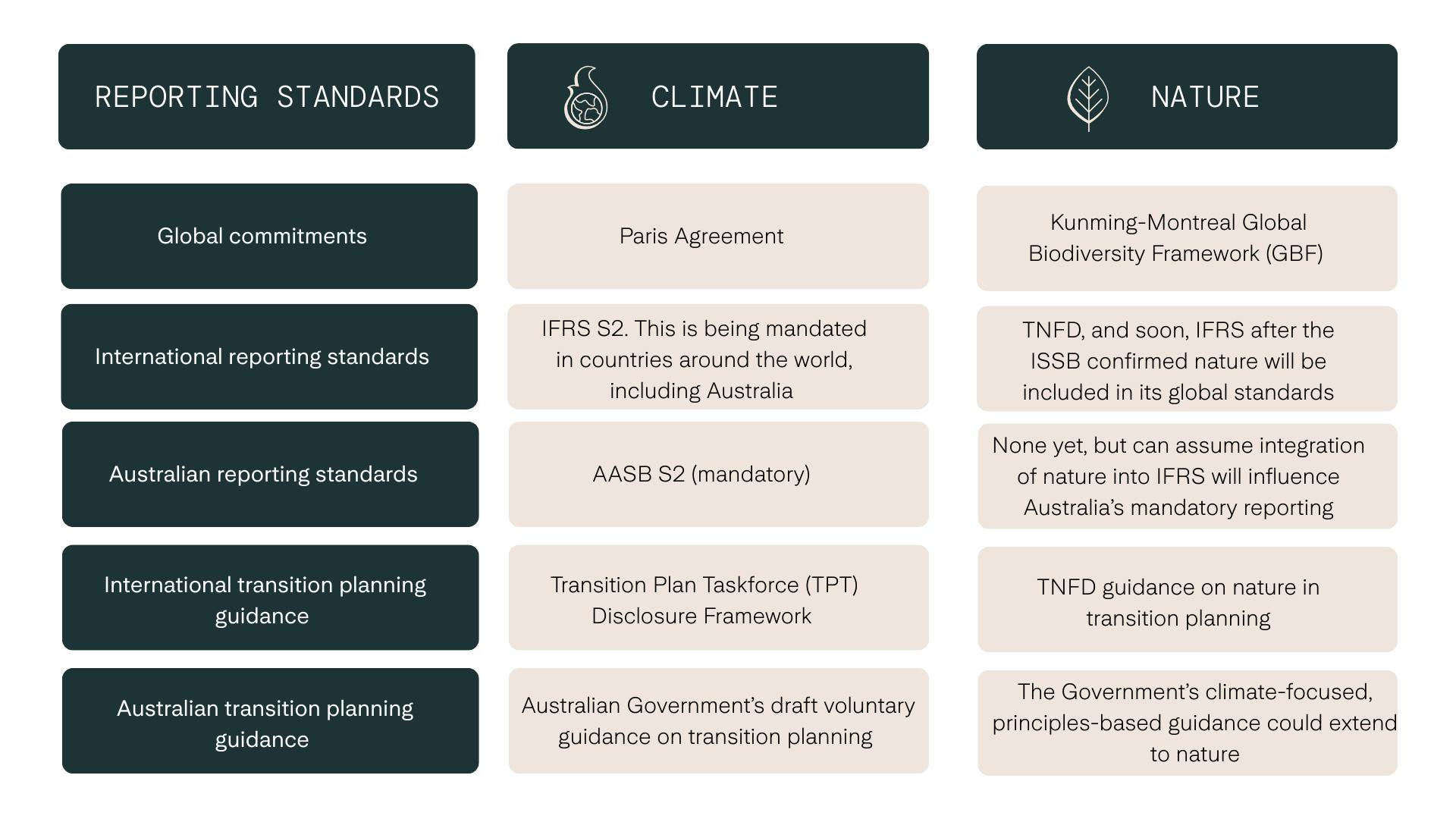
Practical ways to apply the guidance
- If you are yet to begin transition planning: the guidance can assist you in developing a Transition Plan that considers both nature and climate, in a single coherent and complementary approach. It will guide you through setting priorities, defining governance, identifying actions and aligning your strategy with global policy goals.
- If you already have an existing Climate Transition Plan: the guidance can help you integrate nature into your existing Transition Plan, rather than creating a new one. By retaining 16 of the 19 TPT recommended disclosures, it allows you to use your current structures while expanding their scope to cover nature-related dependencies, impacts, risks and opportunities. See Figure 3 on page 6 of the guidance, featured below.
- If you’ve undertaken a LEAP assessment: the guidance will show you how insights from a LEAP assessment can be used to inform strategy and support you to complete the TNFD recommended disclosure on transition planning, known as Strategy B. See Figure 4 on page 8 of the guidance, featured below.
Where nature fits in the TPT Disclosure Framework
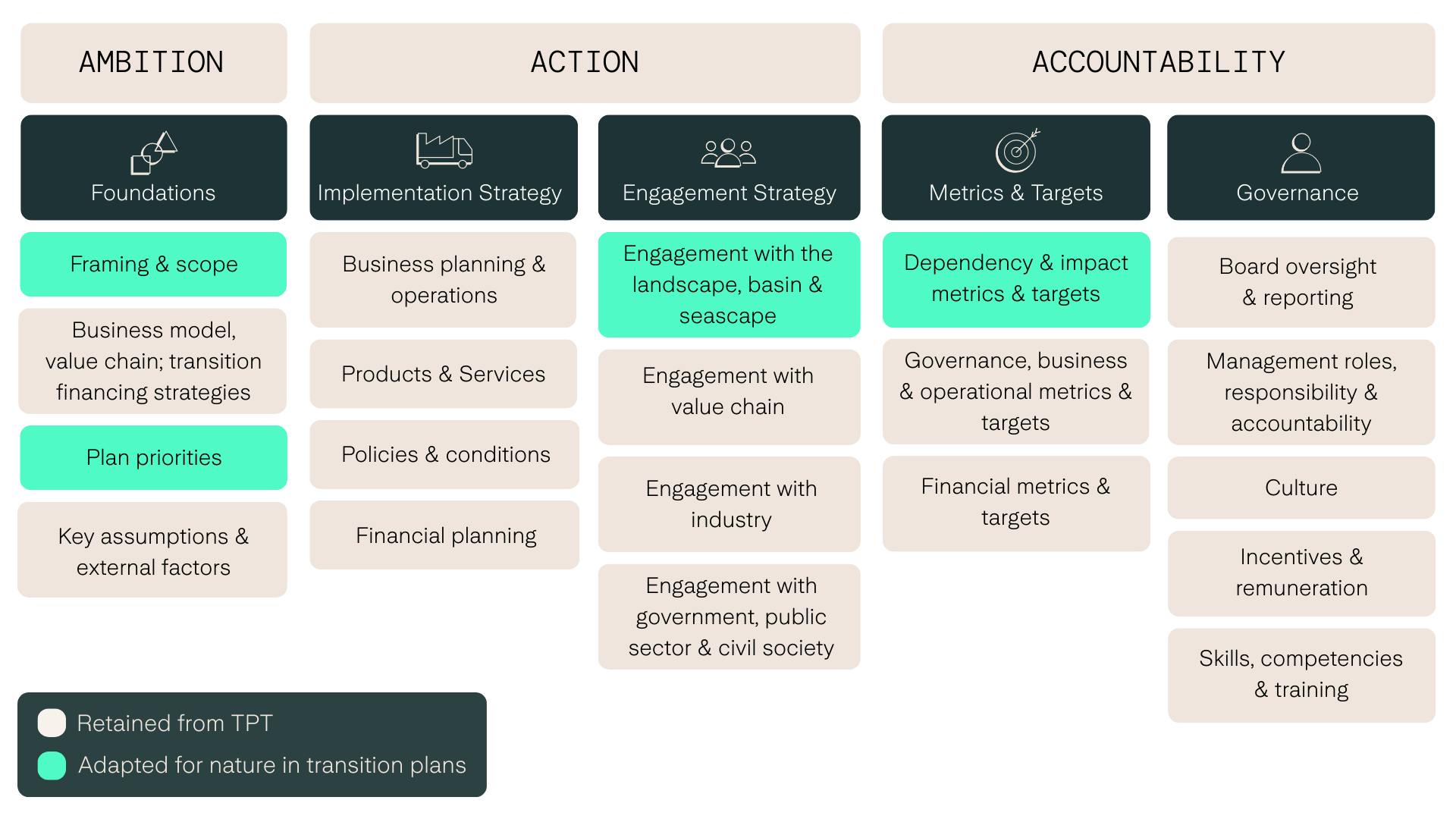
Figure 3: Structure of nature in Transition Plan disclosure guidance adapted from TNFD's Guidance on nature in Transition Plans - Page 6.
The guidance can support both strategic planning and reporting
- Strategic planning: section 4 of the guidance outlines how to incorporate nature into your Transition Plan. It is centred around the five themes for transition planning that form the base of the TPT disclosure framework. These themes are foundations, implementation strategy, engagement strategy, metrics and targets and governance. See Figure 2 on page 5 of the guidance, featured below.
- Reporting: section 5 outlines how information about nature in Transition Plans can be disclosed. This can be done as a standalone report and within annual disclosures that are aligned with the TNFD recommendations.
Themes for nature in Transition Plans
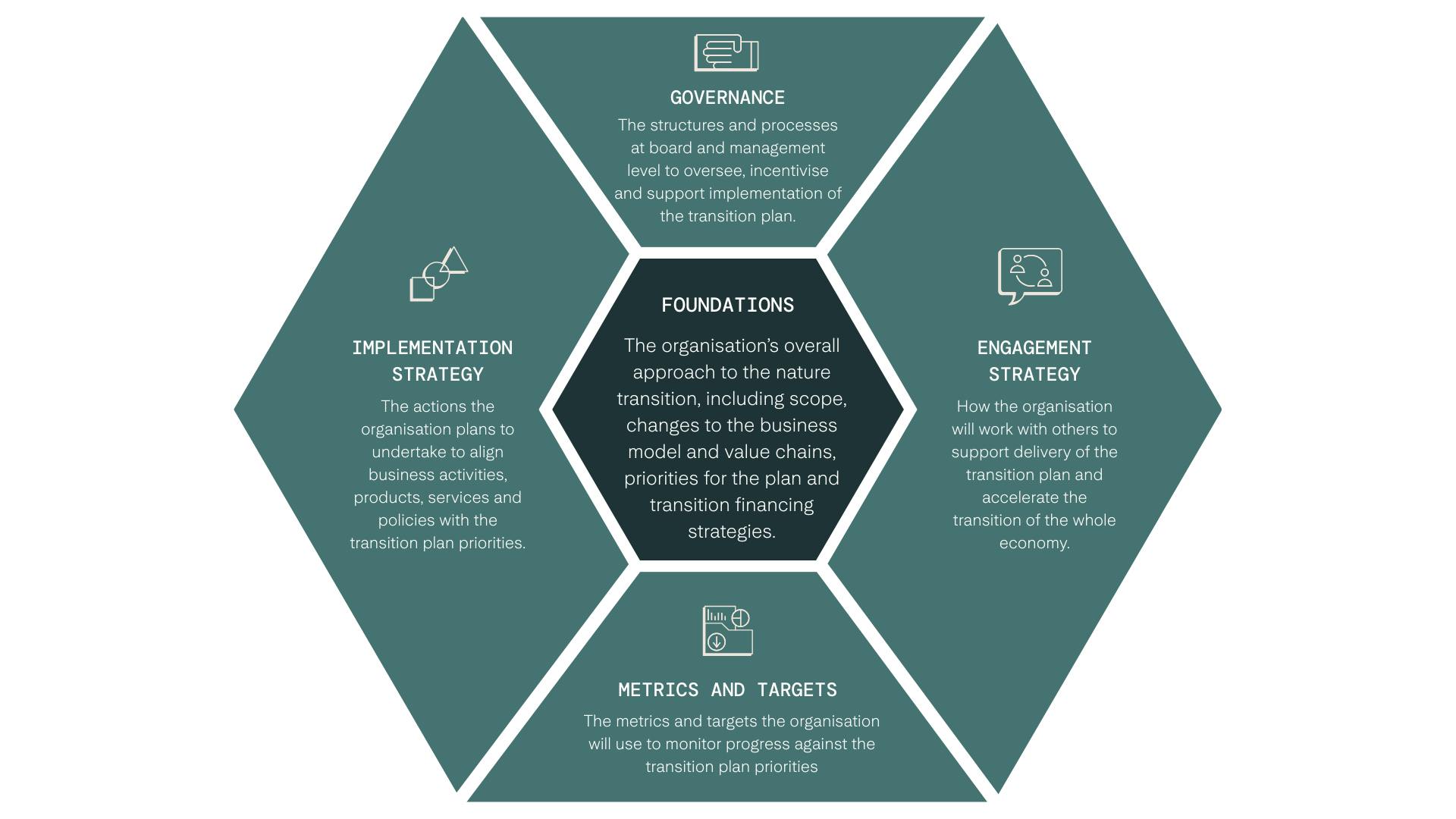
Figure 11: Themes for nature in Transition Plans adapted from TNFD's Guidance on nature in Transition Plans - page 31
Why should you use it, even though you’re not mandated to?
Like AASB S2, TPT guidance and the LEAP framework, this guidance can be used as an evidence based and credible tool to help organisations respond to the changes already happening to our economy and the natural world.
Here are some examples about how early adoption of voluntary standards and frameworks are helping organisations to make future focused, strategic decisions:
- AASB S2: organisations that have used AASB S2 to assess their climate related risks now have a better understanding of how climate change could affect their commercial performance. These insights are valuable, whether or not reporting is mandatory.
- TPT: organisations that have already established credible Climate Transition Plans (i.e. TPT aligned) are in a strong position to manage climate related risks and opportunities. This helps them prepare for a low carbon economy and climate stressed world.
- LEAP: organisations undertaking nature assessments (i.e. aligned to the TNFD LEAP assessment framework) now have a better understanding of how they depend on nature. They also gain insight into the risks associated with nature loss and the opportunities available when they effectively manage their impacts on the natural world.
Positioning your Transition Plan for what’s next
Organisations that develop and effectively implement Transition Plans in line with the TNFD guidance can be confident that their decisions about business models and value chains are moving in the same direction and at the same pace as the global nature agenda. This agenda is set by the GBF and is rapidly shaping the priorities of investors, regulators, and the market.
Nature in transition planning is an emerging area and there’s no one-size-fits- all approach.
Get in touch to explore what approach is the best-fit for you, building on the best practice examples we’re seeing.
RELATED ARTICLES