Anti-Slavery Week: Seeing the People Behind the Systems
In recognition of Anti-Slavery Week, we spoke with Nick Dexter, Principal Consultant for Human Rights and Modern Slavery at Edge Impact, about why tackling modern slavery is central to credible sustainability action.
“Modern slavery sits at the intersection of social sustainability, governance and business accountability,” Nick says. “it’s a mirror for how an organisation manages its broader sustainability commitments.”
Too often, modern slavery is seen as a compliance exercise. Nick challenges that idea, seeing it as a way to test the strength of an organisation's ethics, governance and courage to act.
“If a company can trace and respond to modern slavery risks in its supply chain, it’s usually also capable of managing the broader social and environmental dependencies that define sustainable business.”
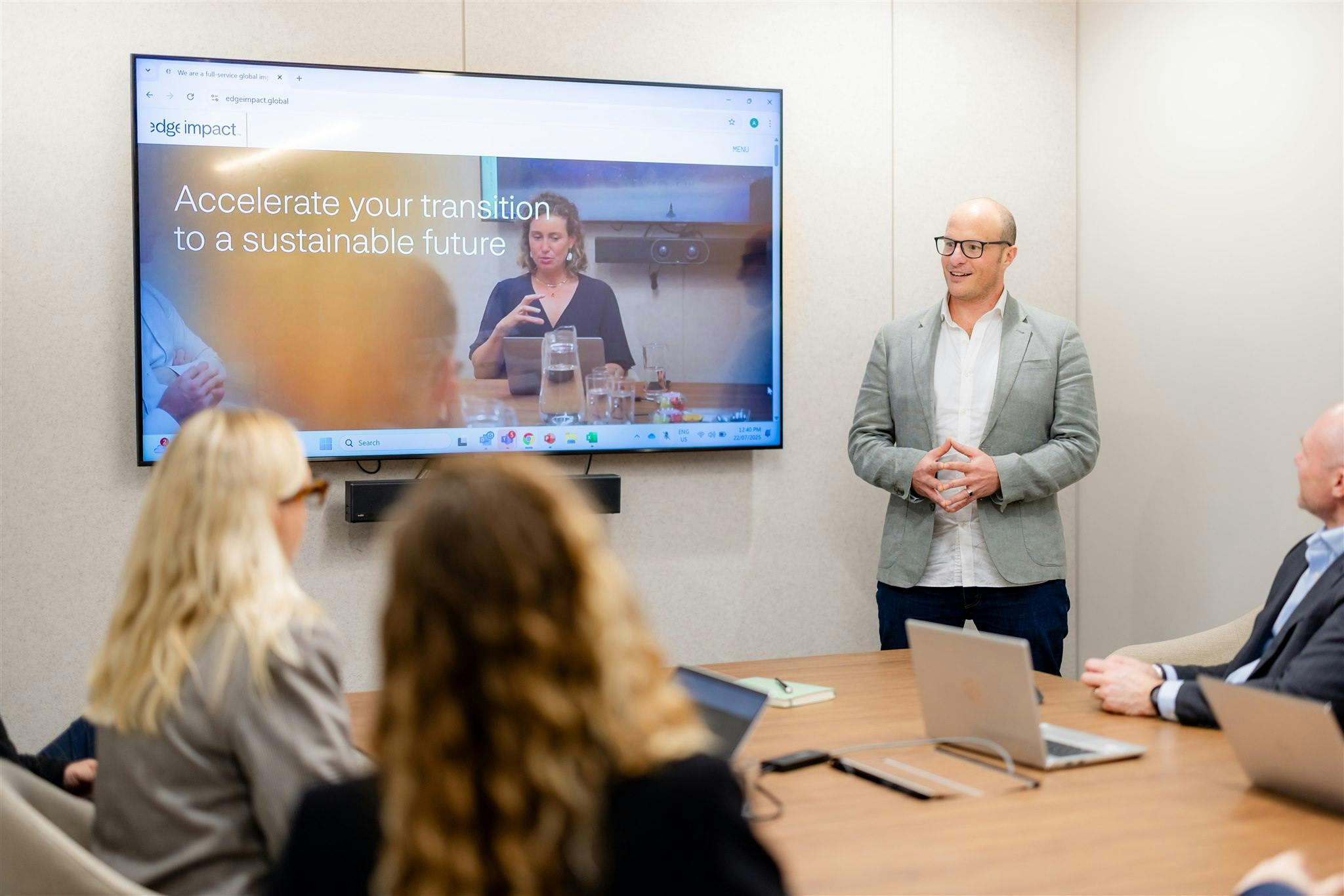
Inside Edge
At Edge Impact, that thinking takes shape through science, strategy and storytelling. The science reveals where the risks lie, combining environmental, social and supply chain data to guide action. The strategy builds governance systems and embeds accountability into procurement processes. Storytelling connects policy to people, showing how decisions made in a boardroom affect lives on the ground.
Nick’s experience in forensic supply chain verification and human rights consulting has shown how evidence and empathy must work together. “The real challenge isn’t just detecting exploitation. It’s closing the distance between decision-makers and workers.”
That perspective has shaped Edge’s work on frameworks like the Pathway to Respecting Human Rights and the Impact Metrics for Modern Slavery, which help industries move from isolated efforts to collective accountability. “It’s not about one company doing better,” Nick explains. “It’s about creating the conditions for collective improvement.”
Looking ahead, he sees technology transforming transparency. “We are entering a time of permissionless accountability. The same tools that can expose you are the ones that can protect you.”
For organisations beginning their journey, his advice is simple. “Start with what you already control. Stay curious. Focus on progress over perfection.”
Anti-Slavery Week is a moment to pause and reflect, but also a reminder that awareness is only the beginning.
Understanding the landscape
How do you see modern slavery risks intersecting with broader ESG or sustainability efforts?
Modern slavery sits at the intersection of social sustainability, governance, and business accountability. It’s often treated as a discrete compliance issue, but in practice, it’s a mirror for how an organisation manages its broader sustainability commitments particularly around procurement, workforce relationships, and ethical decision-making.
From my perspective, addressing modern slavery risk effectively requires the same systems thinking that underpins ESG:
- Environmental and social systems are deeply connected. Climate impacts drive migration, resource scarcity, and economic vulnerability, all of which heighten modern slavery risk.
- The quality of a company’s governance systems, its oversight, data, accountability, and incentive structures, determines whether due diligence on modern slavery is meaningful or performative.
- Social issues are the connective tissue of ESG. Many companies are sophisticated on climate but less so on social risk. Modern slavery provides a tangible entry point to mature those systems, shifting the conversation from “do no harm” to “create conditions for dignity and decent work.”
Ultimately, I see modern slavery as a litmus test for whether ESG frameworks are genuinely about impact rather than disclosure. If a company can trace and respond to modern slavery risks in its supply chain, it’s usually also capable of managing the broader social and environmental dependencies that define sustainable business.
Edge Impact’s approach and impact
How does Edge Impact help businesses identify and mitigate modern slavery risks in their operations and supply chains?
At Edge Impact, we help organisations identify, understand, and act on modern slavery risks through the power of science, strategy, and storytelling.
We start with science: using data-driven analysis to map operations and supply chains, assess country and category risks, and integrate social and environmental datasets to pinpoint where exploitation risks are most likely to occur. This provides an evidence-based foundation for decision-making.
We then focus on strategy: strengthening governance systems, embedding due diligence into procurement processes, and building capability across leadership and operational teams. Our frameworks align with the UN Guiding Principles and OECD Guidelines on Business and Human Rights, ensuring credibility and alignment with global standards.
Finally, we use storytelling to bring people into the picture. We help businesses communicate their progress transparently and authentically: often using worker voice data and lived experience insights to show how systems translate into impact on the ground.
Our goal is to help clients move beyond compliance to genuine accountability. Where modern slavery risk management becomes part of how they do business, not just how they report it.

Can you share an example where our work has led to meaningful change or improved transparency?
A recent example involved helping a large organisation move from seeing modern slavery as a reporting obligation to treating it as a governance and accountability issue. Initially, their processes were fragmented, risk registers existed, but there was little connection between procurement activity, supplier data, and leadership oversight.
We applied Edge’s approach of science, strategy, and storytelling to connect those dots. Using data and structured analysis, we helped them map risk across spend categories, identify where governance responsibility actually sat, and prioritise focus areas. Strategically, we then supported their procurement and executive teams to establish clear ownership, measurable KPIs, and training pathways.
The real shift came through storytelling, helping them communicate these changes internally and externally in a way that built confidence and understanding, not just compliance. Their most recent modern slavery statement now provides a transparent account of how the business manages risk and where it’s still learning, which has strengthened trust with investors and stakeholders.
What sets Edge Impact’s approach apart from others working in the modern slavery and human rights space?
What sets Edge Impact apart is that we’re practitioners first. Our team combines human rights expertise with deep experience in procurement, supply chain management, and organisational governance, which means we help clients embed human rights thinking into the systems that drive everyday business decisions.
Our work is grounded in ISO 20400 Sustainable Procurement, providing a practical framework for aligning commercial processes with social outcomes. We don’t just assess risk, we help businesses design procurement systems that make responsible choices the default, not the exception.
We also take a shamelessly practical view: when we make good practice easy for supply chain partners, we achieve better outcomes for people.
Reflection and inspiration
What motivates you personally to work in this space, and why is it important for companies to take these risks seriously?
My career began in science and data, where I learned the value of evidence and precision. I started out in procurement at a scientific laboratory, managing contracts and supplier relationships that kept research moving. It was a world of systems, controls, and accountability and it sparked an early fascination with how the smallest process decision can ripple across a much larger operating environment.
That curiosity led me into the emerging field of forensic supply chain verification using chemistry and statistics to prove the origin of products. I worked with teams who could take a cotton fibre, an apple, or a prawn and trace it back to the field or farm it came from. We used this science to help major global brands verify claims about provenance, authenticity, and increasingly the social impact of their products.
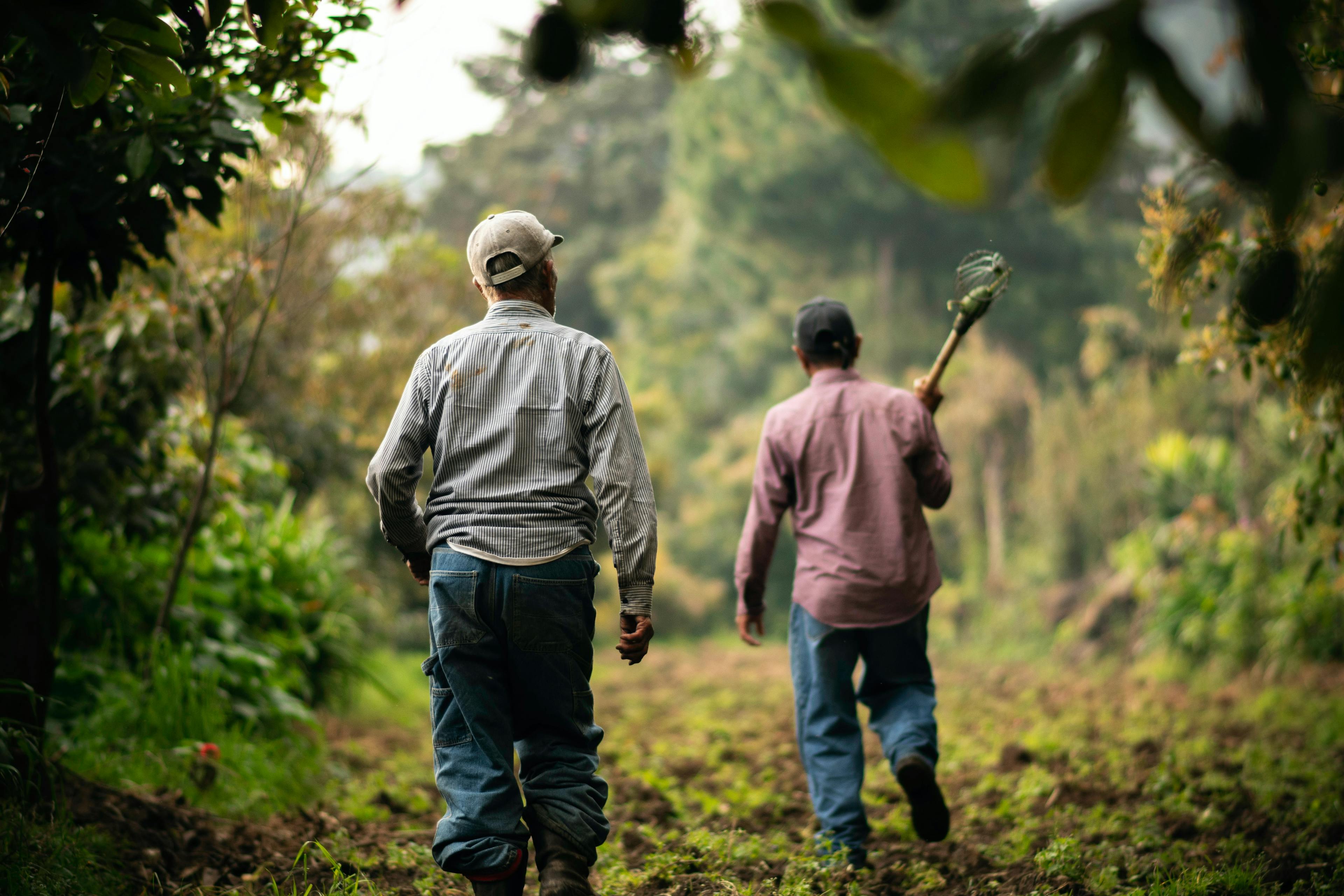
It was during that time that I spent periods in the field, including in places like Côte d'Ivoire and Xinjiang, connecting with the primary stages of global supply chains. Seeing the people behind the products we use every day was transformative. It made me question not just how we verify what we buy, but how distance, geographic, organisational, and moral, dulls our response to human impacts. I began to understand that the real challenge isn’t just detecting exploitation, but closing the distance between decision-makers and workers.
That insight eventually brought me to human rights and sustainability consulting, where I could bridge the worlds of evidence and empathy. Today, as Principal Consultant for Human Rights and Modern Slavery at Edge Impact, I help businesses align their supply chains with their values; using data, governance systems, and due diligence frameworks to make accountability practical and actionable.
I draw heavily on my background in procurement, my understanding of verification technologies, and my belief that credible systems are what turn good intentions into real change.
Alongside my consulting work, I’m pursuing a PhD in Accountability at the University of Wollongong, exploring how worker voice data can help collapse that moral distance; creating accountability frameworks grounded in the lived experiences of workers themselves.
In short, I began in science, but I’ve stayed focused on truth. Whether through a forensic lab or a boardroom, my work has always been about one thing: helping businesses see the people behind their products, and act accordingly.
What progress are you most proud of in terms of Edge Impact’s work addressing human rights and modern slavery?
What I’m most proud of is the work we’ve done at Edge Impact to help industries move beyond compliance and towards collective accountability, particularly through the development of collaborative frameworks like the Pathway to Respecting Human Rights and the Impact Metrics for Modern Slavery.
These frameworks were designed to make progress both practical and shared. The Pathway gives organisations a clear roadmap for embedding human rights due diligence across governance, procurement, and operations, while the Metrics project provides a common language for measuring progress and impact. Together, they’re helping entire sectors, from property and construction to telecommunications, understand what good looks like, where they stand today, and how to move forward.
What makes this work meaningful to me is that it’s not just about one company doing better; it’s about creating the conditions for collective improvement. By co-designing these frameworks with industry, we’ve helped shift modern slavery efforts from isolated statements to coordinated systems of accountability, where businesses learn from each other, benchmark transparently, and collaborate to drive change.
It’s this kind of systems-level progress (practical, evidence-based, and deeply collaborative) that gives me confidence we’re moving closer to making respect for human rights a standard part of how business gets done.
Looking ahead, what emerging trends or challenges do you think businesses need to prepare for?
I’ve spent my entire career in an age where, if you wanted to understand your supply chain, you had to ask your supply chain partners, and then rely on what they chose to tell you. That era is ending.
We’re entering a time of permissionless accountability, where technology is making traditional disclosure-based approaches increasingly redundant. If you want to know where your t-shirt came from, you can test it. And if the declared chain of custody says otherwise, science can prove it wrong. Forensic verification, big data, and worker voice technologies are transforming how transparency and accountability operate.
These tools mean two things for business:
- They will strengthen enforcement, giving regulators and civil society unprecedented visibility into operations and supply chains.
- And they will reward those who get ahead, because the same technologies can form the backbone of credible due diligence systems that protect sourcing programs before they come under scrutiny.
The trend I think businesses most need to prepare for is this: the tools that can expose you in the future, are the same tools that you can employ to protect you.

For companies just starting to explore modern slavery risks, what would be your top piece of advice?
Start with what you already control, your procurement processes and governance systems, and build from there.
Many organisations begin by trying to map their entire supply chain, but that can quickly become overwhelming. Instead, focus on integrating human rights thinking into the decisions you already make every day: how you source, how you contract, and how you manage supplier performance. That’s where real leverage and accountability lives.
Use frameworks like ISO 20400 Sustainable Procurement to guide you. It’s not just about ticking boxes; it’s about embedding respect for people into the systems that drive your business.
And remember: you don’t have to solve modern slavery alone. You won’t be an expert at the start, and that’s okay. So put away your policeman hat and approach your supply chain with curiosity and humility. Explain what you’re trying to achieve and be open to the fact that many of your partners will have as much, or more, to teach you as you do them.
Most importantly, stay curious. The goal isn’t to have perfect answers, but to build a process that keeps finding better ones.
To learn how your business can enhance its approach to modern slavery risks, connect with our Sustainable & Ethical Procurement team here.
Related Articles